
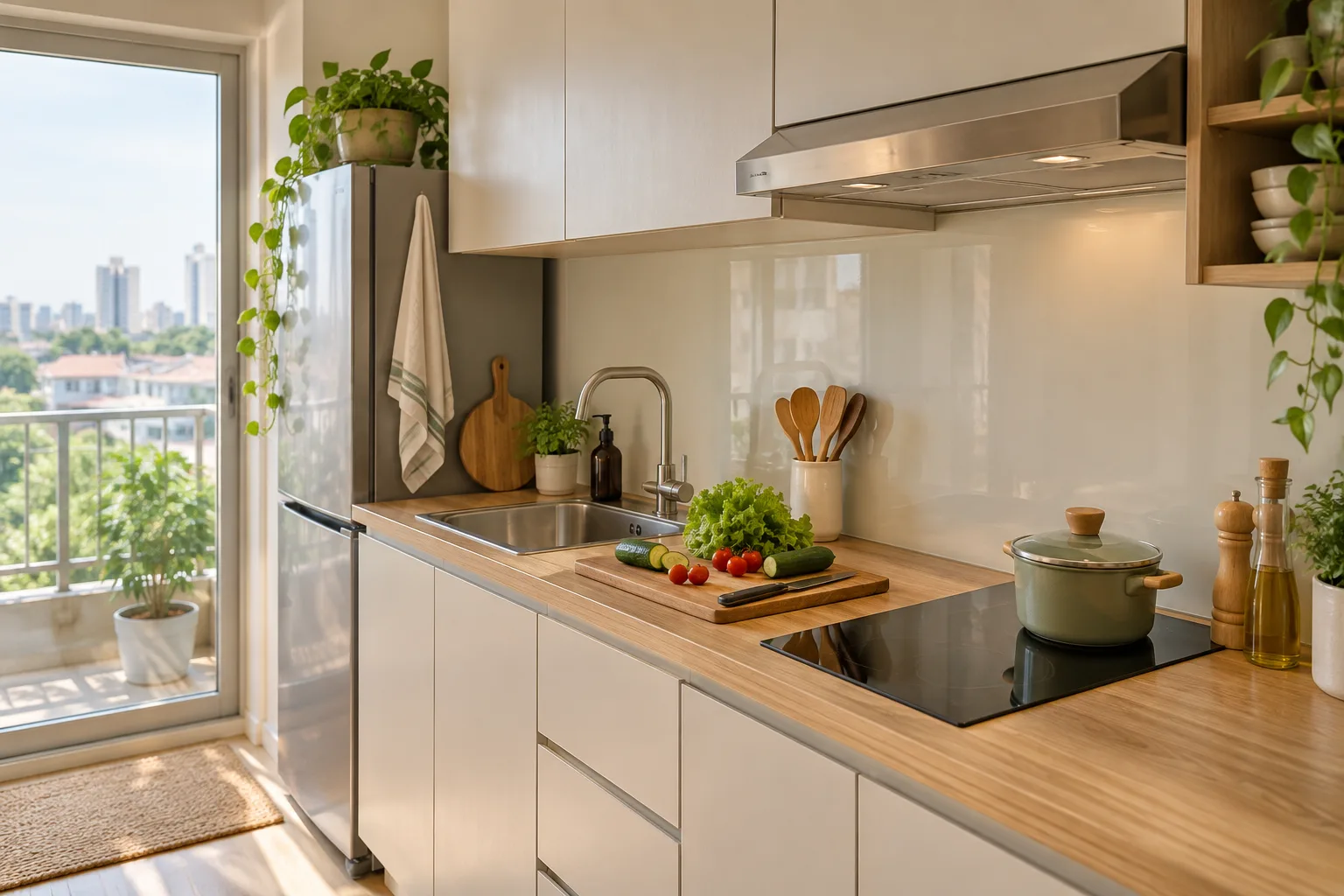
A kitchen that looks lovely in photos may not have enough preparation space for the meals you regularly make. A smaller kitchen, meanwhile, can work well if its layout suits your steps. Before deciding, think through an ordinary meal, from taking food out of the fridge to putting the dishes away, and walk through those steps in the actual space.
Start with what you do often, not a dream kitchen
Note whether you usually reheat food, make simple meals, or prepare several ingredients at once, how many people you cook for, and whether anyone else uses the kitchen at the same time. This helps you work out whether you really need more counter space, pot storage, or a place for a particular appliance.
If you often bring food home, plan where you will unpack it, sort waste, reheat it, and wash up too. Even without cooking full meals, you still need those spaces. A large appliance should not occupy every available surface and leave nowhere to put a plate.
Walk through taking things out, preparing, cooking, and washing
Follow your usual sequence without actually turning on cooking equipment. Check for places to set things down between steps and how far fridge and cupboard doors obstruct the walkway when open. If two people use the kitchen, stand in the places you would use at the same time and notice where you have to step around each other.
- Is there a surface for ingredients before washing or preparing them?
- Is there somewhere to put dishes and utensils after washing, in line with how you work?
- Can you reach everyday items without moving several appliances first?
- Can cupboard doors and drawers open without hitting things you plan to add?
- Can you appropriately keep cleaning supplies separate from cooking items?
Measure appliance spaces and installation requirements
Compare the dimensions of models you intend to use with the space, and check the manufacturer's clearances for operation, ventilation, and servicing. Do not look only at the dimensions of the appliance itself. If you need another socket, a different water connection, or changes to building services, ask the owner and consult the appropriate person before buying.
Ask about ventilation and building rules
Ask the person showing the home to explain the equipment already installed and how to care for it according to its manual. Ask the building directly about cooking rules and permitted appliances. Do not assume every extractor hood vents outside or that an installed hob means you may add any other kind of equipment.
Allow for storage and clearing up after meals
Compare your dishes and dry goods with the storage actually available. Keep everyday items within easy reach, and think about how the counter will be ready for use again after washing up. If you are uncertain, use your current kitchen as a reference: write down what gets in your way and test those situations in the next home you view.
Meals you often make … / essential appliances … / items you need out at once … / preparation bottlenecks … / clearing-up bottlenecks …
Plan further with measuring a room before buying things and organizing storage in a small home