
Buying more boxes or shelves may hide your belongings, but finding and putting them away can remain difficult. First notice where things pile up and when you use them. Organize storage around how you move through the room before choosing new equipment.
Sort belongings into three access levels
Keep everyday items where you can easily take them out and put them back. Things you use occasionally can go in a cupboard or deeper compartment; seasonal items can occupy less accessible spaces. Sort by how you actually use them, because the same object can matter differently in different homes.
Keep storage near the activity
- Entrance: Keys, bags, and things you need to take when leaving home.
- Workspace: Small accessories and cables used at that desk.
- Wardrobe: Separate ready-to-wear items from those awaiting repair or a new owner.
- Kitchen: Group things by the steps of preparing, cooking, and putting away food.
If you have to cross the room every time you put away a small item, try moving its storage spot before adding more boxes. A good system makes putting things back as easy as taking them out.
Measure both the opening and how you will remove items
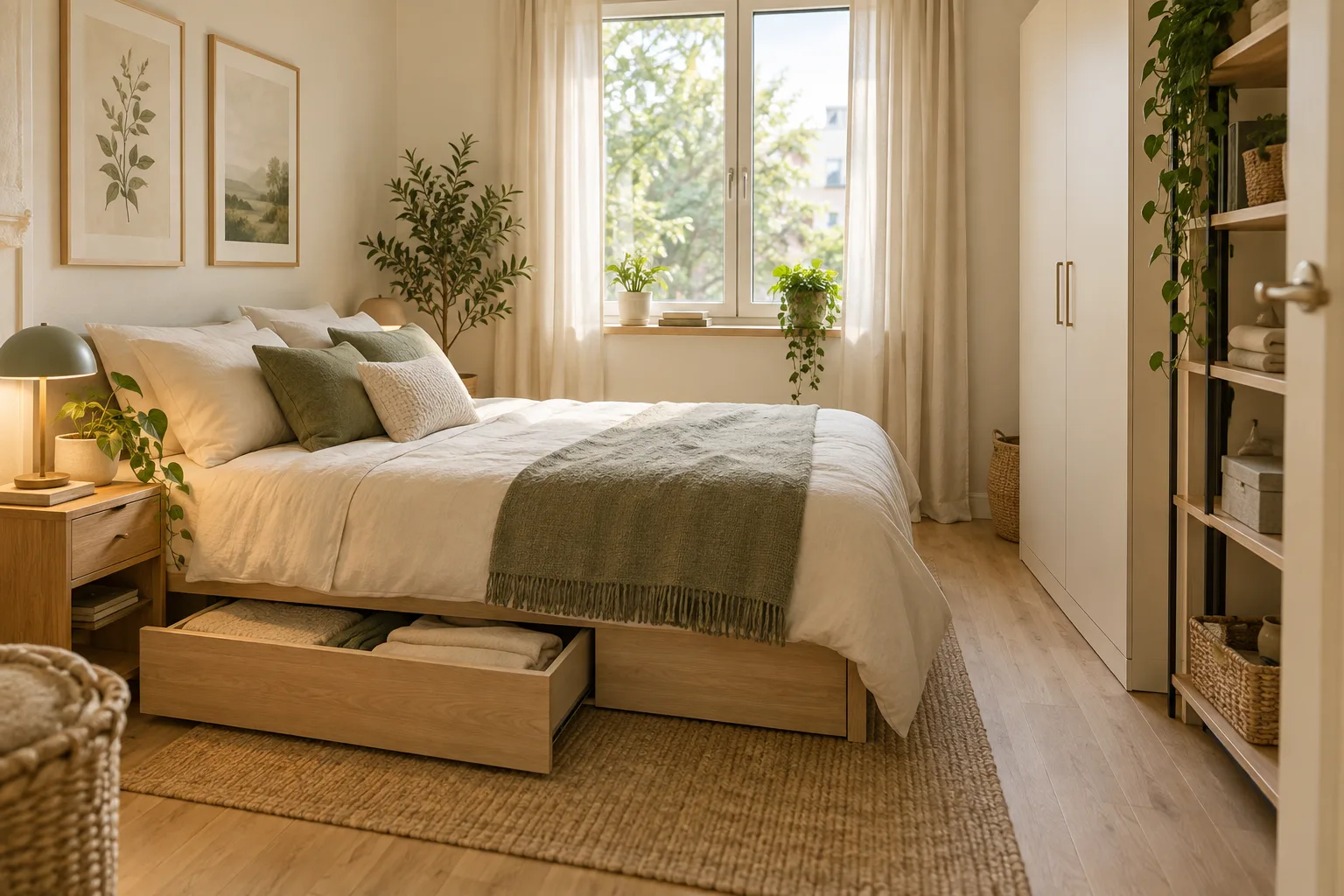
Before buying a box, measure the space, including tracks, handles, and the clearance needed to open cupboard doors. A box that fits but cannot be lifted out is awkward to use. For under-bed storage, test how far you can pull the box out and how much space must be cleared. The guide to measuring usable space can help.
Use vertical space while following equipment requirements
Choose shelves suited to their load and install them as the manufacturer instructs. Put heavy items in appropriate, accessible places. If shelves must be secured to a wall, ask permission and use a suitable installer. Do not leave tall shelving unsecured when anchoring is required simply because you rent.
Test one zone before organizing the whole room
Start with the spot that gets cluttered most often. Arrange only the things you currently use, and label categories so everyone understands them. After a while, see why items are being left outside their storage spots. Perhaps a compartment is too small, a category is unclear, or you have more than you need. Adjust the system before extending it to other areas.
Before buying more storage, ask three questions: Exactly what will go in it? / How much is there? / How will you take it out and put it back here?
If you are moving, sort your belongings before packing and wait until you have seen the new room's actual spaces before buying storage. That way you do not have to move boxes you cannot use there.