
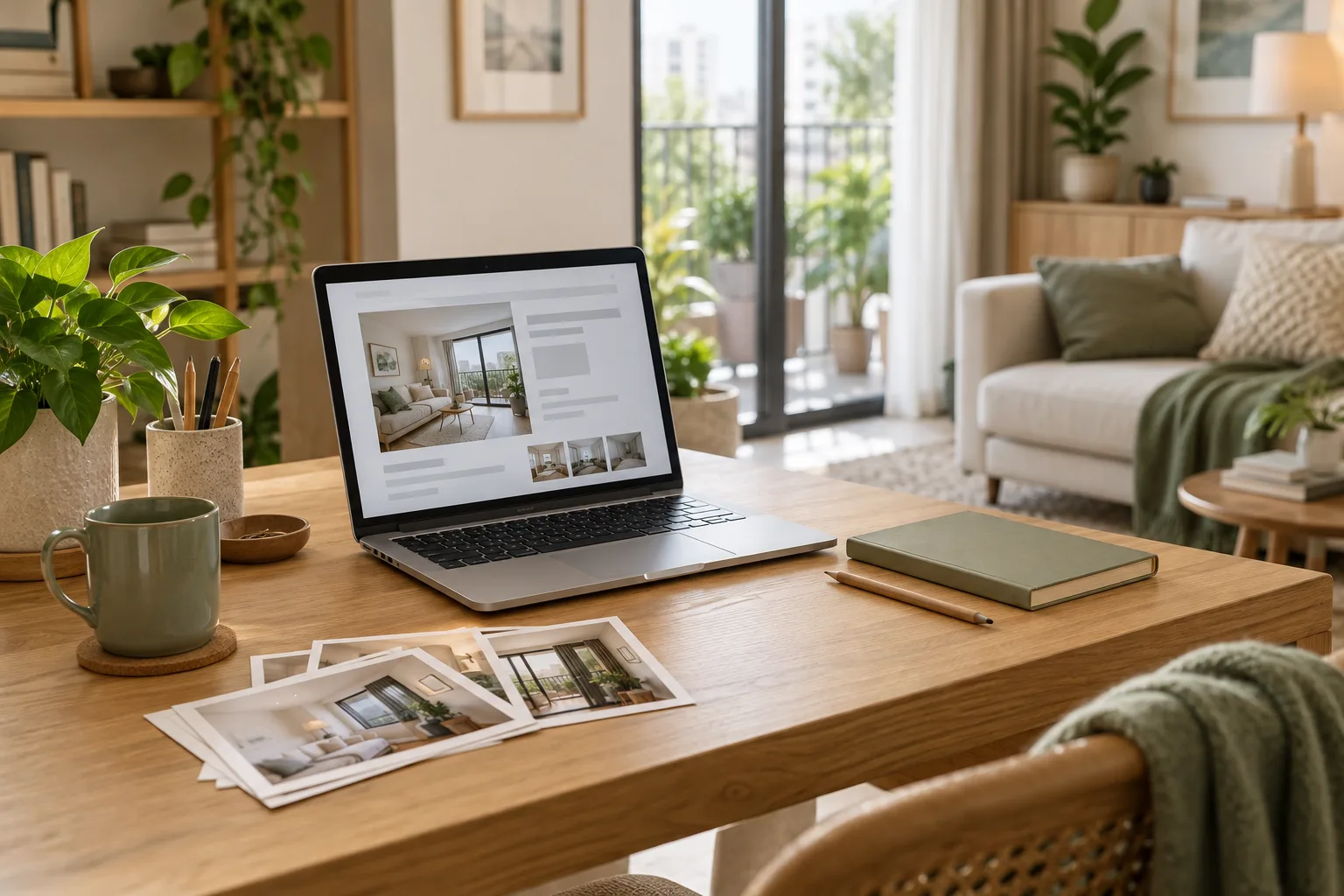
People searching for a home often open several listings to compare. When details are buried in a long description or limited to claims like “beautiful” and “great value,” they may still have no idea whether a home suits them. Write for the questions someone needs answered before booking a viewing, and put figures and conditions up front.
Use a headline with verifiable property details
Include the property type, location or development name, and important features such as the room count or furniture actually supplied. Choose only a few highlights so the headline stays clear. Do not name a distant station or neighborhood just to attract searches, or promise returns or convenience beyond the facts you have.
Keep the key details together
- Listing type and the price that applies to this particular property
- Area, number of rooms, floor, or building type, as verified
- Development location and an appropriate level of access information
- Date when the property can be handed over or occupied
- Furniture, appliances, and parking actually included
Use consistent units of measurement. If documents or sources give different figures, reconcile them before publishing. Do not choose the larger figure just because it looks more appealing.
Keep terms separate from descriptions of the atmosphere
For rent, say what the price covers and which rental period it applies to. List extra charges, pet conditions, and use of shared facilities only to the extent confirmed by the owner and building. If you are still waiting for an answer, say readers should ask for details rather than claiming everything is permitted to make the listing seem complete.
Use a short template before proofreading
Property type and location … / Price and unit … / Size and layout … / Inclusions … / Important conditions … / Availability date … / Points to know … / Viewing contact and times …
Add a sentence about how the space works where photos do not tell the whole story, such as separate rooms or storage, and describe its actual condition. Clearly label illustrative or rendered images; do not present them as photos of the property's current state.
Maintain the listing after publication
When the price or availability date changes, update both the data fields and every relevant part of the description. If people keep asking the same question, the listing probably needs more information. Change its status when the property is no longer available so people do not waste time contacting you about outdated details.
Before publishing, read the listing as someone who has never seen the property, and check it against photos that tell the story of the space. Then you can create a property listing through the website.