
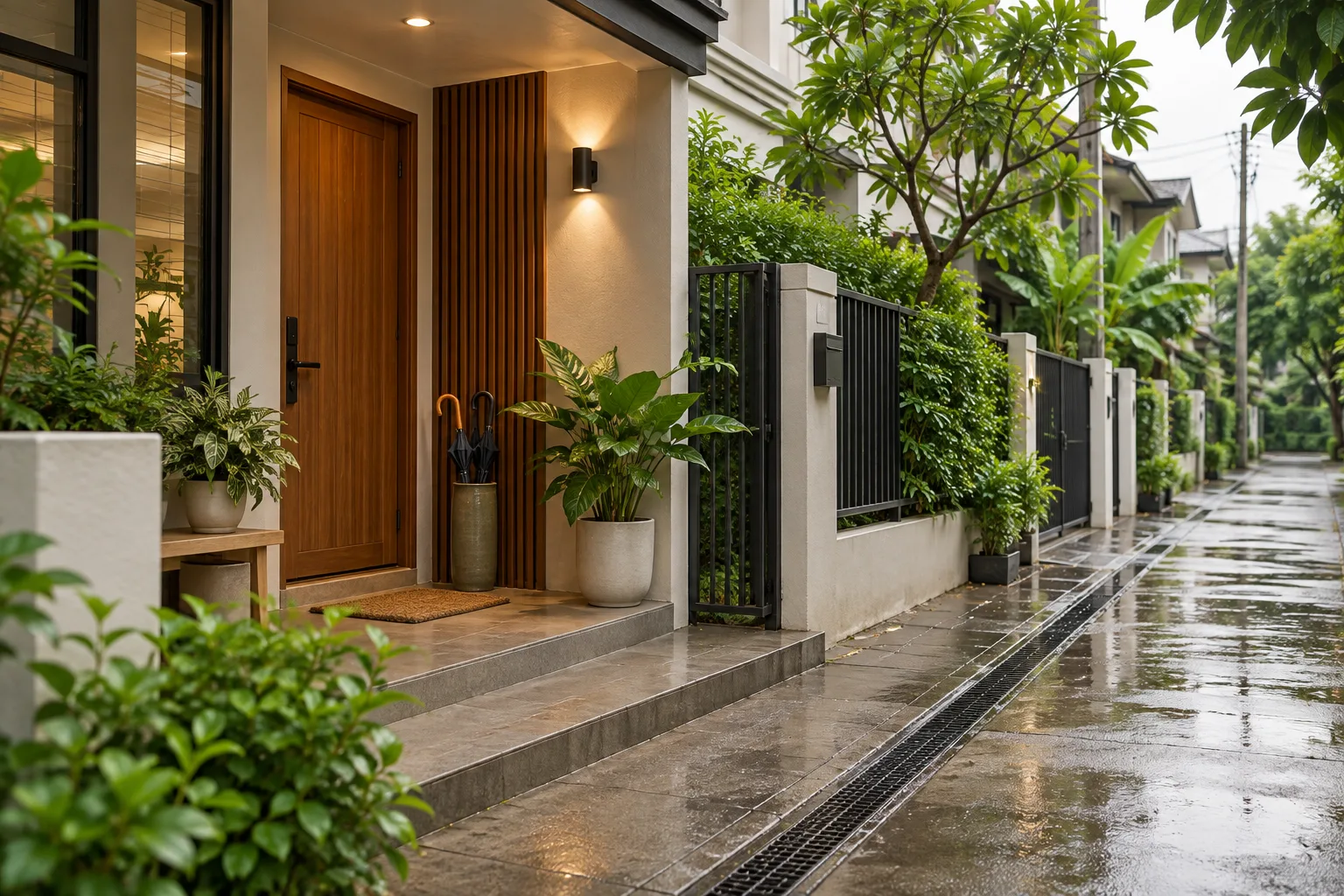
Viewing a home after rain may reveal details of daily use that you would miss on a sunny day, such as sheltered spots and wet walkways. One visit, however, cannot establish the condition of the entire building or its flood risk. Use what you see to prepare questions for the owner and management rather than diagnosing it yourself.
Follow the route you would use every day
Look at the way from the drop-off point or parking area to the building entrance. Where would you have to walk outdoors or carry things across wet ground? If you normally walk to a station, check the actual route and ask about alternatives when it rains. Do not venture into flooded areas or places staff have not permitted you to inspect.
Record what you see, where and when you see it
If you find standing water, damp marks, or stains you want to ask about, request permission to take wide and close-up photos. Note where in the building you saw them and how long after the rain. Do not label every mark a leak or conclude from a photo alone that it will be easy to fix.
- Was it inside the unit, on the balcony, in a corridor, or outside?
- How would you describe exactly what you observed?
- Has this spot been inspected or repaired before, and is there information you can review?
- Who will coordinate any further inspection, and when will they respond?
Test wet areas only through normal use
See whether it is convenient to open the balcony door, leave an umbrella, or bring wet shoes inside. Ask management how drainage points are maintained. Do not remove covers, climb, or inspect building systems yourself. If the building's condition or the cause of dampness needs assessing, engage a suitable specialist for the appropriate scope of inspection.
Ask about past experience in detail
“There has never been a problem” is less useful than knowing what happened at a particular time and how it was handled. Ask about entering and leaving during heavy rain, areas that have previously been closed, and how incidents are reported. Distinguish documented information from individual opinions.
Compare with an ordinary day
If possible, revisit the same places in different weather and note what still needs checking. Do not let one set of post-rain photos stand in for an inspection before buying or renting, especially if the owner cannot yet answer an important question.
Quick record: Date and time … / Weather … / Route walked … / What you observed … / Answers received … / Inspector or next contact …
Use this alongside the property-viewing checklist and real-world commute test to assess both the home and the routes around it.