
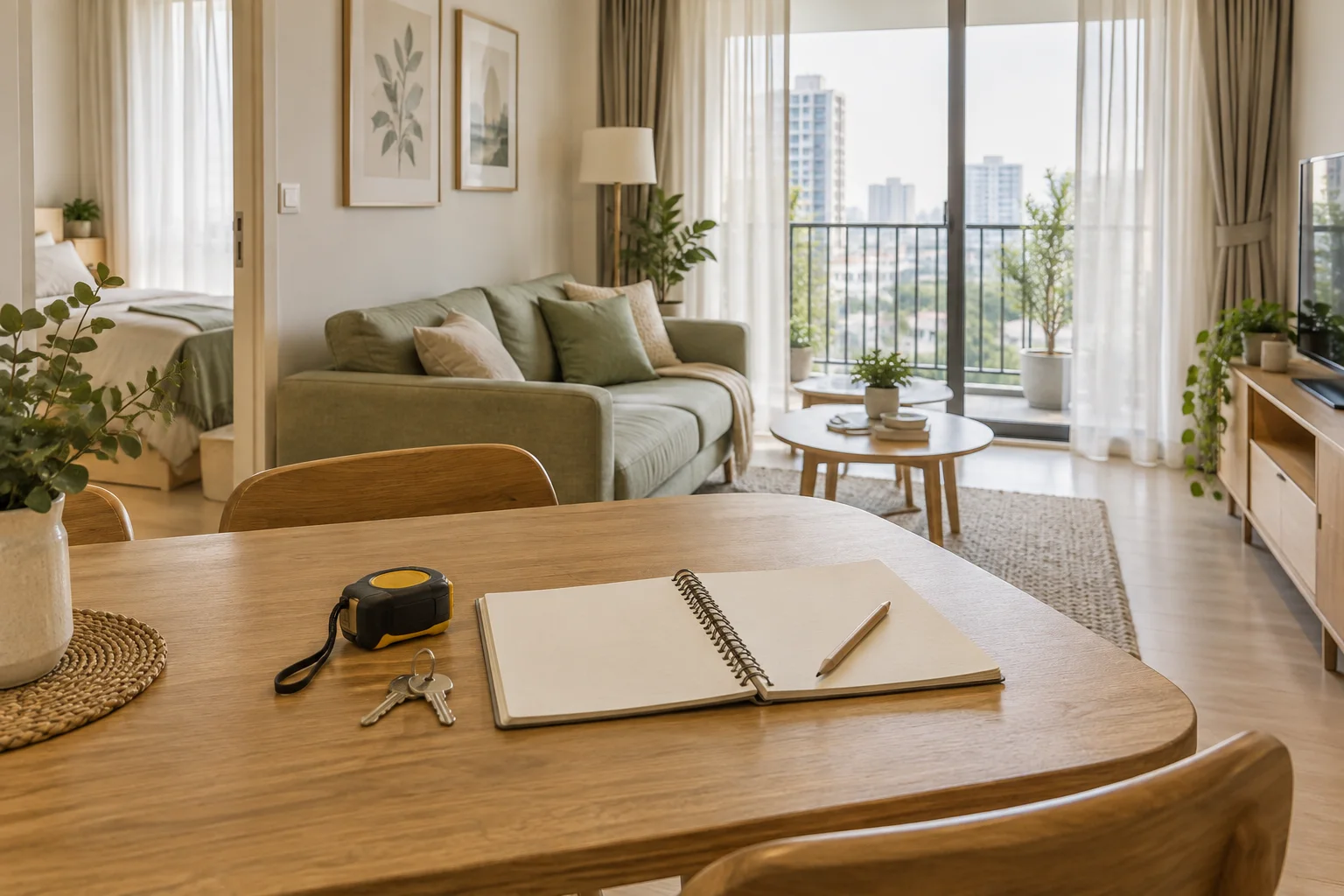
Listing photos can help you shortlist rooms, but a viewing is your chance to discover how you would live in the space. Instead of simply walking around, briefly try parts of your routine: open a cupboard, sit where you might work, and listen with the window closed. Use the same headings in your notes for every room so you can compare them later.
Bring four things: a charged phone, a notebook or notes app, a tape measure, and a list of large belongings you would move in. Ask the person showing you the room before taking photos or testing equipment.
Inside the room: Test these six things in everyday use
- Light and privacy — Open the curtains and see where the light falls and whether windows face neighboring buildings. Think about when you will be at home. If you are viewing at a different time from when you normally use the room, ask for more information or arrange another visit.
- Noise with windows open and closed — Pause the conversation and listen to sounds from the road, corridor, lift, and equipment in the room. Note the day and time: a weekend afternoon may sound different from a weekday morning.
- Water and bathroom — Ask to try the taps, shower, and toilet as you normally would. Notice water pressure, drainage, smells, and signs of damp. Photograph anything suspicious and ask how it will be inspected or repaired.
- Air conditioning and appliances — Check that the items included in the rental match the listing and work normally. Try the lights, check the remotes, and ask about the air conditioner's maintenance schedule. If anything is faulty, have building staff or a technician inspect it; do not open covers or try to repair it yourself.
- Doors, windows, and furniture — Open and close doors, drawers, wardrobes, and windows. Check whether locks work and whether any parts are damaged. Note existing marks so you can agree on the room's condition at handover.
- Usable space — Measure where the bed, desk, and cabinets you need would go, including space to open cupboard doors and pull back a chair. Do not rely solely on the room's total floor area. If you will bring large belongings, ask about doorway sizes and moving rules too.
Outside the room: Check three things you will encounter daily
- The route from the building entrance to the room — Walk through the drop-off area, lifts, and corridors yourself. Consider how convenient they would be while carrying things. Ask about access for residents and visitors and how parcels are received.
- Facilities you would use — Ask about opening hours, booking rules, and charges for areas that interest you. Check parking, rubbish disposal, and pet rules with building management. Distinguish facilities you can actually use from those with further conditions.
- Travel and daily essentials nearby — Walk to the station or transport stop and check your return route at the time you would use it. Look for food, laundry, or household-goods shops that matter to your daily life. Read the guide to choosing a neighborhood by testing your commute.
Before deciding: Clarify three more things
- Every cost — Ask for an itemized breakdown of rent, payments due before moving in, water, electricity, internet, parking, and other services. Separate one-off costs from monthly costs, and request documents or written confirmation of how each is calculated.
- Your contact and the contract terms — Verify whether you are dealing with the owner or an authorized representative. Ask to see a draft contract and discuss the lease term, notice to move out, return of the security deposit, and responsibility for faulty equipment. If wording is unclear, ask the landlord to explain and reconcile it before signing.
- The room's condition when you collect the keys — Agree on outstanding work and when it will be done. Record furniture, meter readings, the number of keys and keycards, and existing damage. Check them again at handover and keep a copy of the list acknowledged by both sides.
Thailand's Office of the Consumer Protection Board (OCPB) advises tenants to review the contract and how water and electricity charges are calculated before agreeing to rent, and to keep the contract, bills, and receipts. See its original guidance for tenants. If you are unsure whether a condition applies to your case, ask the relevant authority or a professional and bring the actual draft contract.
Take notes like this to compare rooms afterward
- Room / Viewing date and time: …
- What I like and what suits my needs: …
- Things still to ask or test: …
- Work needed before move-in: …
- Upfront costs / Recurring costs: …
- Acceptable / Needs fixing first / Does not meet my needs: …
This checklist is for an initial look at how you might live in the room. If you find cracks, leaks, or abnormal building systems, ask building staff to arrange a further inspection by a qualified person and consider their findings before deciding.
Ready to compare rooms? Browse rental property listings, then choose rooms suited to your routine and constraints and arrange viewings.