
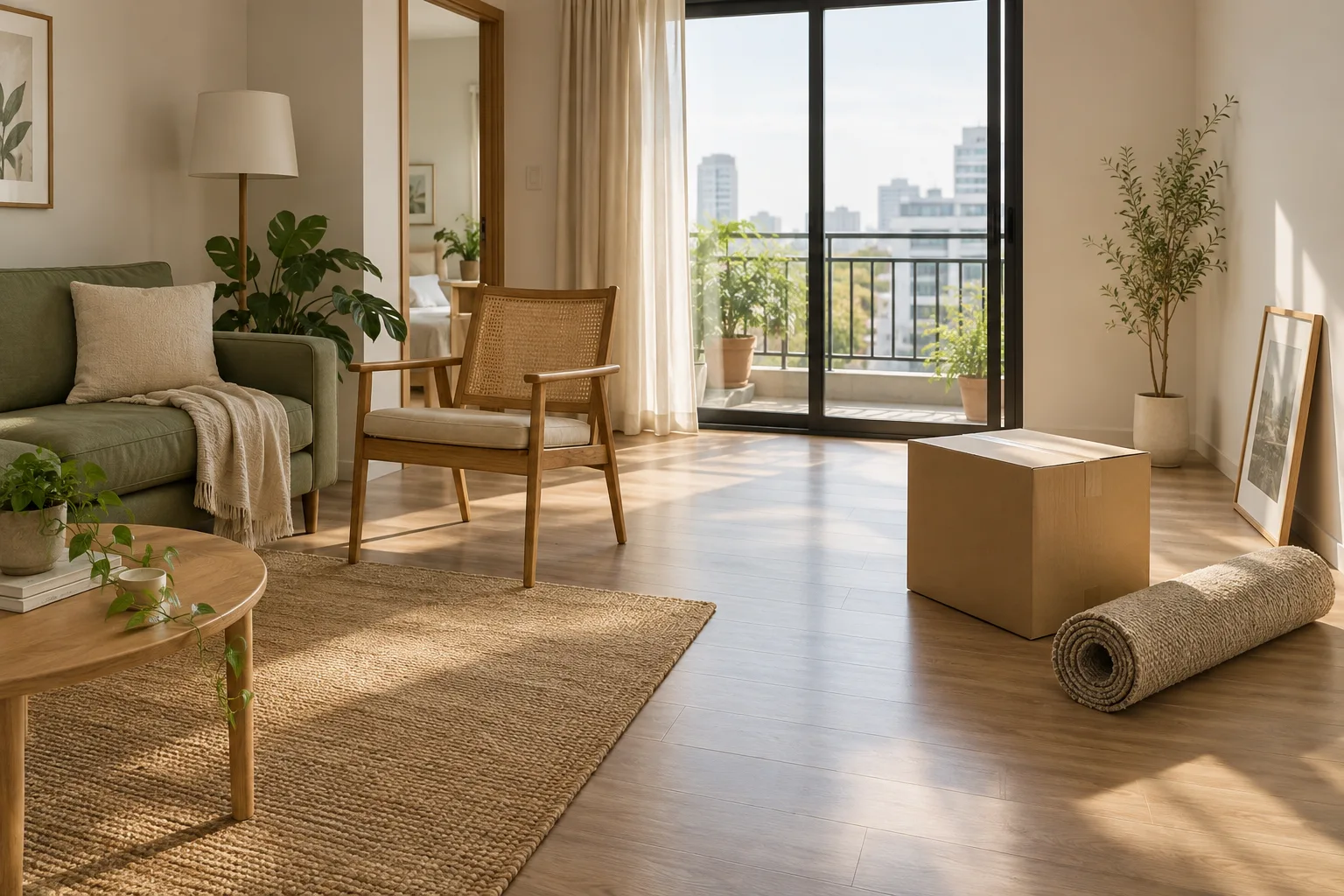
“Fully furnished” can mean a different set of items in each listing, while an “unfurnished” room may already have appliances or built-in fittings. Before comparing prices, list what you will actually receive and what you already own. Then assess which option fits the length of time you plan to stay.
Divide your inventory into three columns
- Included with the room: note each item, its dimensions and condition, and anything that needs confirmation
- Already yours: check its size and whether moving it is worthwhile
- Still needed: separate first-day essentials from items that can wait
If items overlap, ask the owner whether their furniture can be removed or stored and how. Do not assume you may take the owner's furniture out yourself just because you will not use it.
Compare usability, not just the item count
The supplied desk may not suit your work, or the bed may leave too little space for another cabinet. Map your daily activities onto the floor plan and measure actual dimensions. Test included appliances as you would normally use them, and ask who is responsible for their upkeep under the agreement.
Separate upfront costs from costs during your stay
For upfront costs, include moving, purchases, installation, and payments required by the rental terms. For monthly costs, include differences in rent and services. For example, if another room costs 1,000 baht more per month and you stay 12 months, the rent difference is 12,000 baht. You must still compare the cost of buying, moving, maintaining, and eventually dealing with your belongings. This is a hypothetical calculation, not proof that one option is always better value.
Use the income-and-expense tracking ideas in the Bank of Thailand's budgeting guide when preparing your budget, and do not count a security deposit that has not yet been returned as money available for purchases.
Think about moving out before buying
If you expect a short stay, consider whether you will move, store, or pass on new items afterward. Furniture that fits this room exactly might be difficult to use in the next one. For a furnished room, document the condition and the individual items you receive so you can look after them during your stay.
Finish the comparison with the same questions
What will let me move in on day one? / What additional upfront money will I need? / Do the included items suit my daily routine? / Who maintains the appliances? / What must I arrange when I move out?
The right answer depends on what you own, your budget, your time, and your plans. Use the room-measurement checklist and move-in handover record to check the details before deciding.