
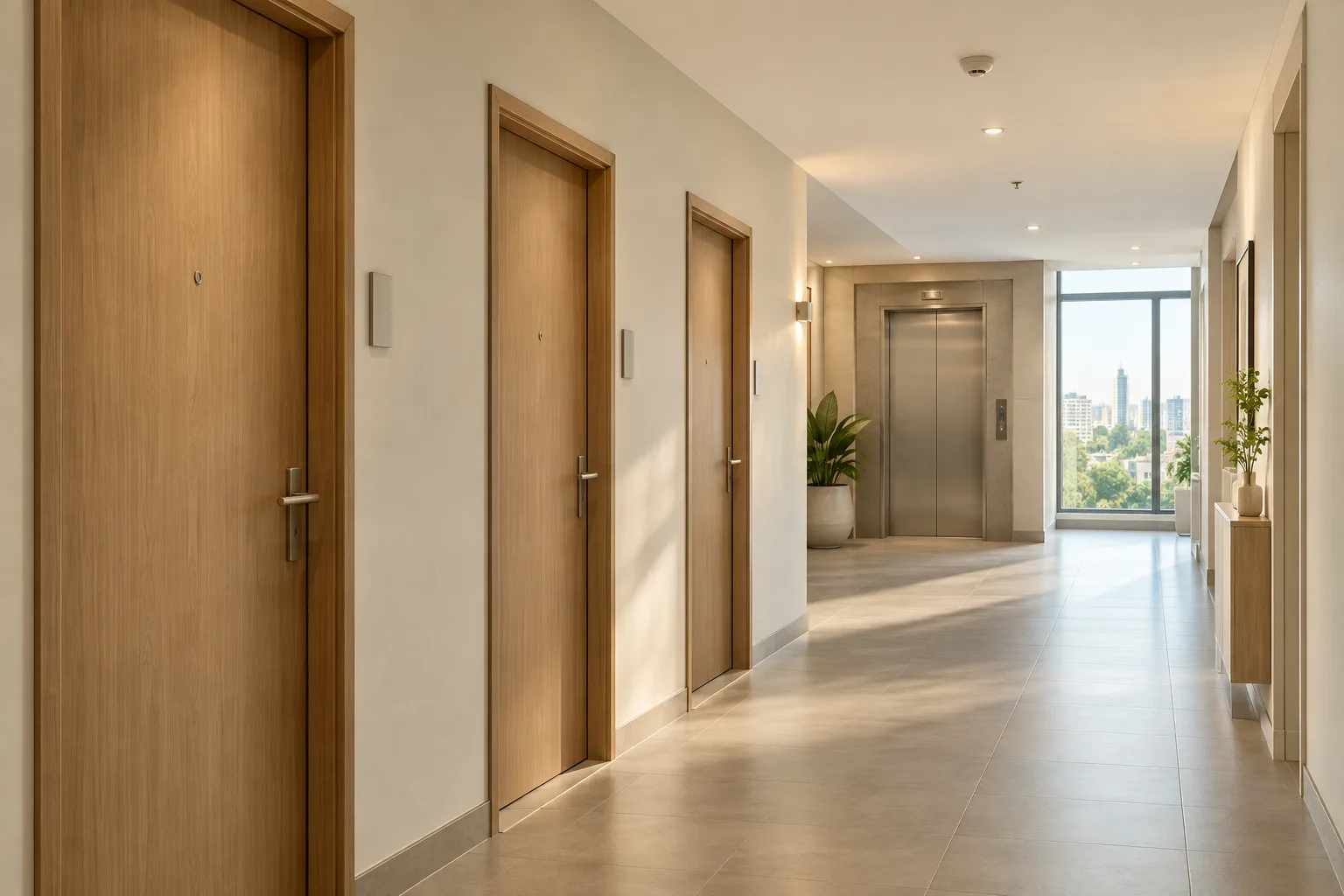
“High floor,” “corner unit,” and “near the lift” give you a rough idea of location, but they do not tell you whether a home suits your life. Walk the actual route, check the view from spaces you will use often, and observe conditions at times close to your usual hours at home.
Walk from the building entrance to the unit door
Start from your usual entrance, whether the lobby, car park, or station walkway. Note where you must change lifts, take a detour, or pass through an access-controlled door. Consider days when you are carrying several bags or expecting a visitor. A route that looks short on a plan may involve more steps than you think.
Ask building staff about receiving deliveries, moving items, and accessing areas in everyday use. If anyone in your household has particular access needs, try the route together and confirm the necessary details with the building. Do not draw conclusions from a single picture of the entrance.
Check the unit's position relative to shared spaces
Notice whether the door is near a main corridor, lift, storage room, or other shared space. These positions do not affect every building in the same way, so listen and observe when the areas are in use, and ask staff about their hours and how they are used.
- When did people pass your door during the viewing?
- How much of the interior can be seen from the corridor when the door opens?
- What happens in nearby areas, and who confirmed that information?
- How can you move items in and out under the building's rules?
- What should you revisit at another time?
Look at the view from where you will actually sit and stand
Stand where you expect to put your desk, sofa, and bed. Check what you can see outside and whether anyone outside can see in. With permission, inspect existing curtains and openings and measure the relevant spaces. The view from right against the window may be very different from what you see where you spend most of your day.
Record the time when checking light and noise
Separate what you observed on that visit from conclusions about the entire day: for example, you heard corridor noise during the viewing but do not know what evenings are like. If that matters to you, ask to visit at a time closer to your own routine. Do not assume higher floors are always quieter or corner units always better.
Compare several homes against the same list
Use the same categories for each unit so a view you like does not overshadow access within the building or privacy. Note unanswered questions and seek answers before deciding, especially for things that moving furniture cannot fix.
Unit position notes: usual route … / nearby spaces … / where you spend the most time … / sounds you heard and time of visit … / what you have not checked …
Read more about checking light and noise during a viewing and choosing shared facilities you will actually use