
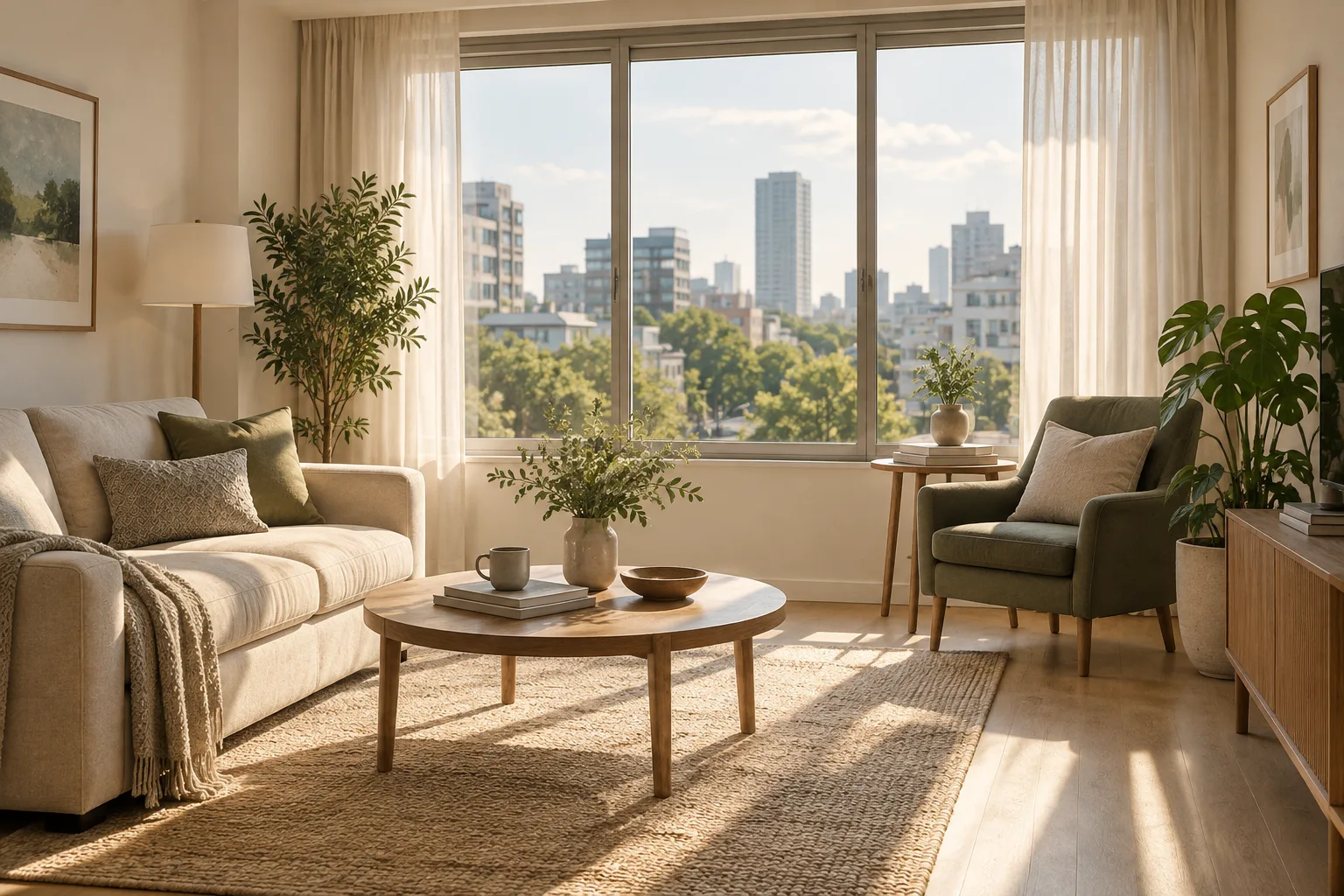
Listing photos cannot tell the whole story about light and noise. The same room can feel different at different times and as activities around the building change. Start with questions based on when you actually use your home: Do you sleep during the day, take afternoon meetings, or relax in the evening? Plan your visit around those questions.
Start with the times that matter to you
Write down when you will be in the room and what you will be doing. If your first viewing does not fall at those times, ask for more information or request another visit when possible. Visiting at different times adds information, but it cannot establish conditions throughout the year; note what remains unknown.
Check daylight with curtains open and as you would normally use them
Notice where light falls on the desk, bed, and screen you expect to use. Open the curtains, then close them to the level of privacy you want. A room can look bright with every curtain open, but you may not actually want to live that way. If you plan to add curtains, ask about conditions and dimensions before assuming this will be easy.
The room's orientation is one useful clue, but nearby buildings, awnings, and window positions also matter. Check the actual room rather than assuming a particular direction suits every development.
Pause the conversation and listen from several spots
- Listen where you would sleep or work, with doors and windows closed.
- Compare the sound with the windows open if you intend to use them that way.
- Notice sounds from corridors, lifts, roads, and equipment that is running.
- Record whether the sounds you heard were occasional or continuous during your visit.
A phone recording can help you remember, but do not treat it as an engineering assessment or a finding about noise standards.
Ask about activities that may not happen during your viewing
Ask building staff about moving hours, known renovation work, and use of neighboring areas. Distinguish between a confirmed schedule and someone's personal experience. If quiet is essential for you, check at more than one time before deciding.
Keep notes you can compare
Date and time … / Spots tested … / Curtain and window positions … / Equipment running … / Light or noise observed … / Effect on my activities … / What I need to check again …
If you work from home, use your findings to plan a work-from-home corner. People working unusual hours can also read about choosing a room for shift work.