
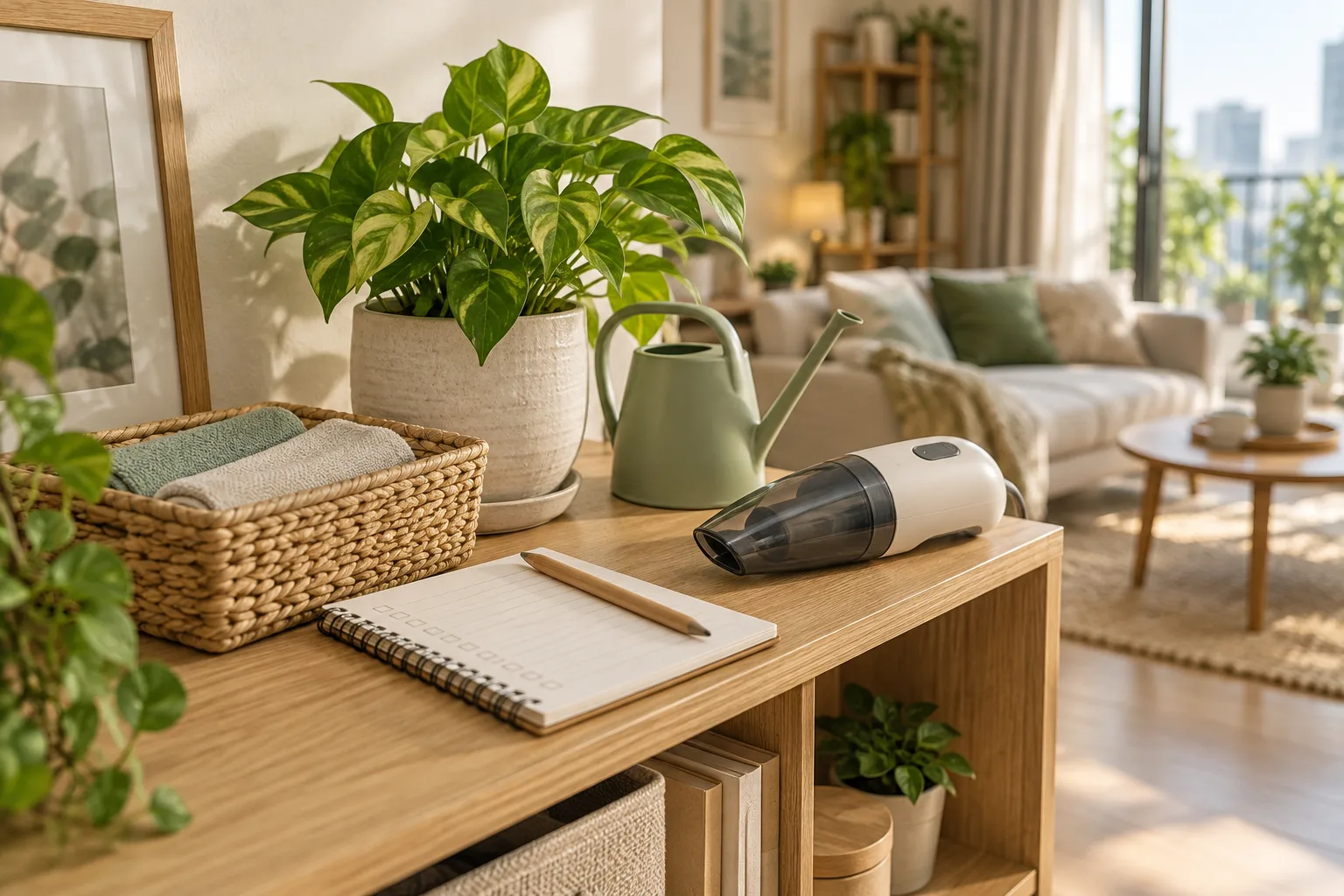
Home care often comes to mind only when something stops working. Try keeping brief notes to track which appliance has shown which symptoms, whom you contacted, and what was last done. The aim is not to fill every month with chores, but to make sure small observations do not get lost.
Start with an inventory of what you actually have
Walk through each area and list items that need care, such as the air conditioner, washing machine, range hood, and furniture with hinges or sliding rails. Photograph model labels for your private records and keep the matching manuals, so you can check instructions and care requirements rather than guessing from the appliance's appearance.
In a rental, mark which items belong to the owner, which you bought yourself, and who your agreement says should coordinate a repair. Knowing who is responsible from the outset helps you contact the right person before arranging work or buying parts.
Set intervals according to manuals and actual use
Not everything needs attention every month. Use a monthly review to check whether any tasks are due under the manual or an appointment with a service provider, then adjust your schedule to actual use. Keep routine surface cleaning separate from appliance servicing so that one is not mistaken for a substitute for the other.
- Area: kitchen / Task: wipe surfaces following the manufacturer's instructions
- Appliance: air conditioner / Next step: check the agreed service appointment date
- Furniture: storage cabinet / Observation: door does not close fully / Contact: room owner
- Documents: service receipts and warranties / Storage: private folder named after the appliance
Describe symptoms clearly for the person handling them
Instead of noting that an appliance has a problem, say what you were doing when it happened, when you first noticed it, and whether it happens every time or only sometimes. If you can safely take a photo or video, attach it to the same message. Do not remove covers or attempt electrical work, building-system repairs, or tasks the manual does not assign to users.
Describe what you see or hear without diagnosing the cause: for example, the left cabinet door does not close completely when the lower drawer is open. Details like this help the person handling the issue prepare a more focused inspection than a guess about which part needs replacing.
Close out each job with results and paperwork
After a service visit, record the date, the work done, what happened when you tested the appliance afterward, and any advice about the next visit. Keep the service receipt too. If the symptom persists, add to the same entry so you can follow the timeline without searching through multiple chats.
Keep the routine small enough to sustain
Start with five items relevant to daily life, then add more only when needed. Divide responsibilities clearly with others in the home, and store notes where everyone concerned can access them without exposing unnecessary personal information.
One-entry template: Area or appliance … / Date noticed … / Observation … / Person handling it … / Appointment date … / Follow-up result …
If you have just moved in, start with what to organize in your first week and use your key handover record as a baseline for the property's condition.