
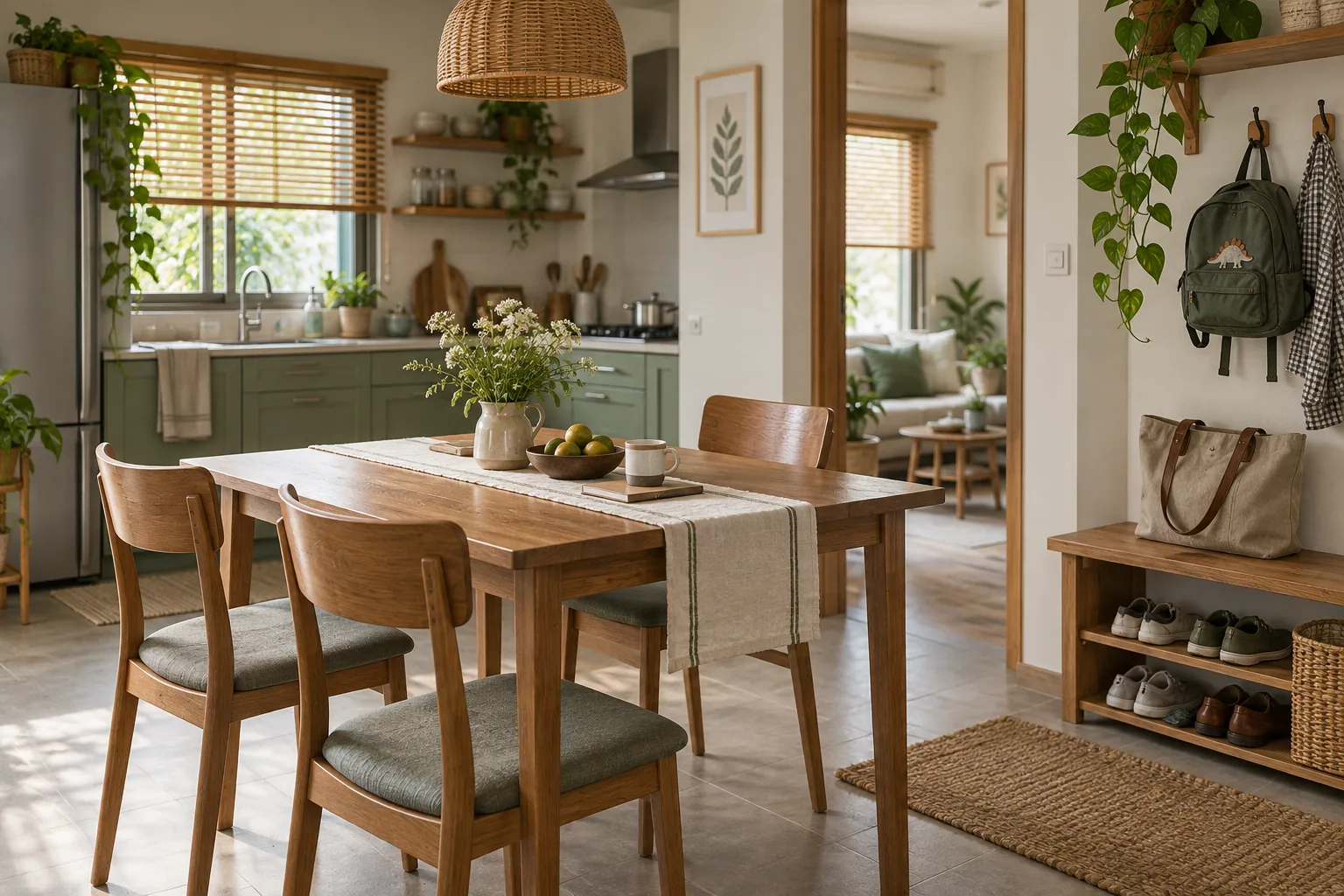
A home everyone likes during a viewing may work differently once you move in. One person leaves early, another attends meetings from home, and someone else comes back late. Compare everyone's daily schedules before choosing a home to see which spaces must be shared and when people will need them at the same time.
Map out a typical day for each person
Ask each household member to note approximate times for waking, getting ready, leaving and returning home, and regular activities. The times need not be exact to the minute. The aim is to spot overlapping activities, such as sharing the bathroom before leaving or cooking while someone else has a meeting.
Separate flexible activities from those tied to fixed times, such as starting work or collecting someone. Use this list of needs when viewing homes instead of judging by room count alone.
Walk the routes you will often take at home
Imagine coming through the door, putting down bags, storing shoes, and going to the kitchen and private rooms. Can two people carrying things pass each other easily? Where would an open cupboard door or dining chair block a main route? Ask to measure important spaces and record their dimensions before assuming your layout will fit.
- A place for each person's belongings on arriving home
- Shared space for food preparation and storage
- Areas where people need to talk, hold meetings, or make noise
- Spaces where people need privacy at certain times
- Routes between those spaces when they are used simultaneously
Look for quiet areas as well as gathering spaces
A spacious living room may not help someone who needs to take a work call while others watch television. With permission, stand in different spots and listen to ordinary sounds. Ask whether other spaces could be used when activities conflict, and agree on household expectations before buying furniture that fixes how spaces can be used.
Compare each person's commute
A home convenient for one person may mean an extra connection or wait for another. Explore routes at the times each person actually travels, including the walk out of the building, pickup and drop-off points, and stops along the way. Then discuss alternatives for days when schedules change, such as when two people who normally share a car must leave at different times.
Choose with agreed priorities in mind
Make a short list of shared essentials and items where you can be flexible. Record each home's advantages, limitations, and unanswered questions. If needs conflict, agree on how to use space or time before assuming you can work it out after moving.
Compare one activity: who uses the space … / time of day … / space needed … / conflicting activities … / backup option … / what to try during the viewing …
Read alongside choosing a neighborhood based on your actual journey and comparing condos, townhomes, and houses by daily routine