
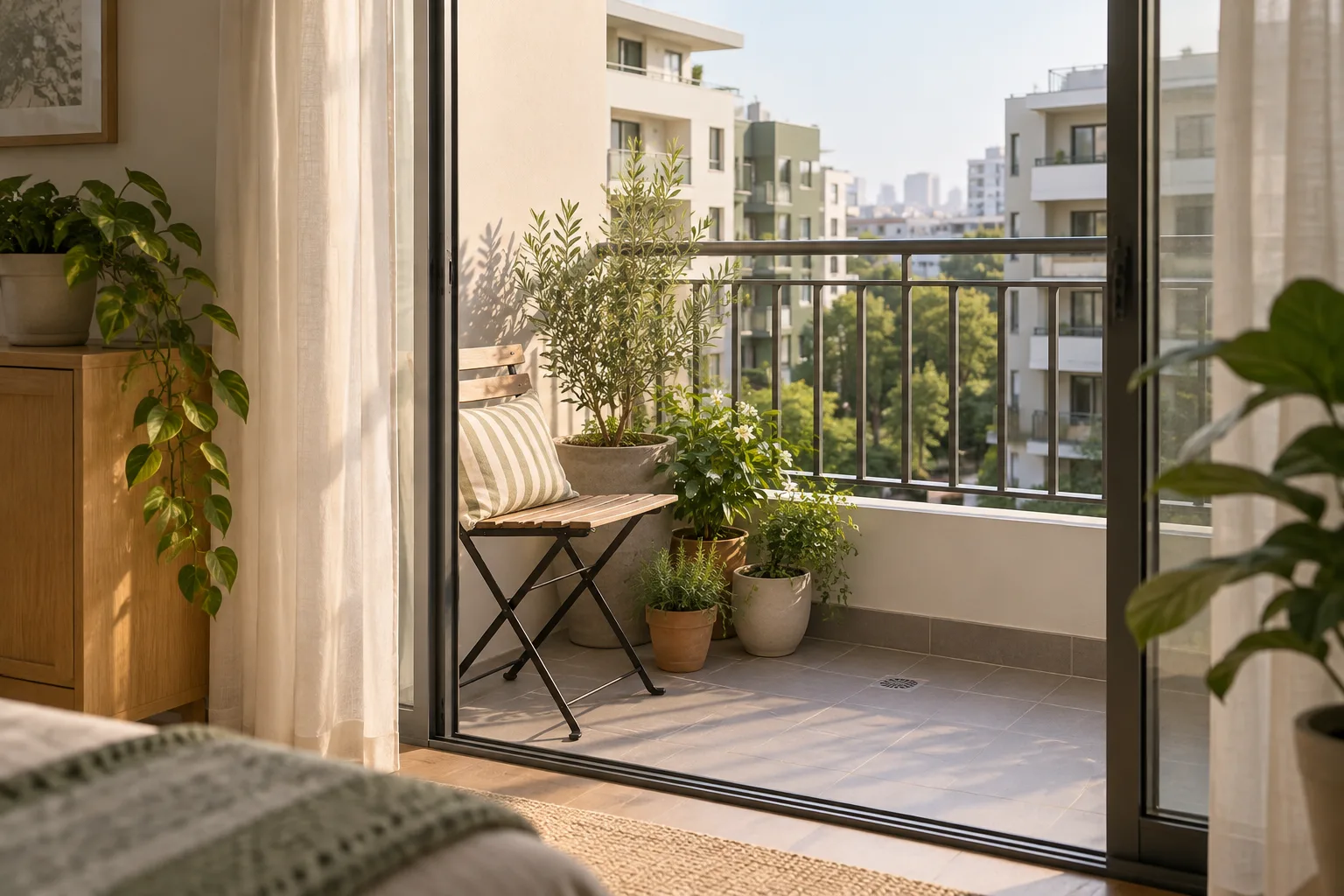
A balcony pictured with a chair and plants may look inviting, but the real space may also have to accommodate an air-conditioning unit or other equipment. Start with what you want to do on the balcony, then check whether the space and building rules allow it before counting it as a major advantage of the unit.
Choose your main activity before buying anything
Do you want to dry laundry, tend plants, sit and relax, or access equipment for maintenance? Each needs a different amount of space. On a small balcony, prioritize the essentials rather than trying to fit in so much that you cannot open the door or get in to care for it.
Measure the space that is actually available
Measure the doorway, usable floor space, and areas occupied by existing equipment. Use the dimensions of a drying rack or chair to mock up its placement, then check that the door still opens and closes and you can reach what needs attention. Do not mistake the total balcony area for space where you can place belongings.
Ask about rules and installation requirements
- What kinds of items or laundry drying are permitted?
- Do nets, shades, or other fixtures require permission?
- How will maintenance staff access equipment and drainage points?
- What rules apply to runoff from watering plants or disturbing other units?
Do not install or alter railings and exterior features yourself based on an online example. If you want to add heavy items or permanent equipment, first ask building management and the relevant specialists to confirm that it is appropriate.
Observe sun, rain, and privacy when you would use the space
Stand where you would normally use the balcony, staying within its usual accessible area. Notice neighboring buildings, the sun's angle, and where rain reaches. A single day's observations tell only part of the story, so ask management about their experience and revisit at another time if these factors matter to you.
Arrange belongings so you can maintain and put them away
Keep walkways and drains accessible. Do not put things on top of the railing or leave light objects that could fall outside the balcony. If you have children or pets, assess access control and suitable equipment for that particular home. Do not assume a standard balcony layout suits every household.
Before deciding: Main activity … / Usable space … / Existing equipment to allow for … / Rules received … / Items requiring permission …
Read about planning a laundry and drying area or choosing a pet-friendly home, depending on how you actually plan to use the space.